
Probate Administration

Settling an estate after a death, the court filings, the taxes, and the house, handled by one firm.
What We Handle
We settle estates for families after a loved one has died. That means the court filings to open and close the estate, the estate's tax returns, and often the sale of the house, all handled in-house rather than farmed out to separate firms. You get one point of contact for the whole process, not three.
We give you a realistic timeline early on, so you know roughly what's ahead. We keep you informed as the estate moves through each stage, and we quote our fee after the first meeting, based on the complexity of the estate, not a flat schedule.
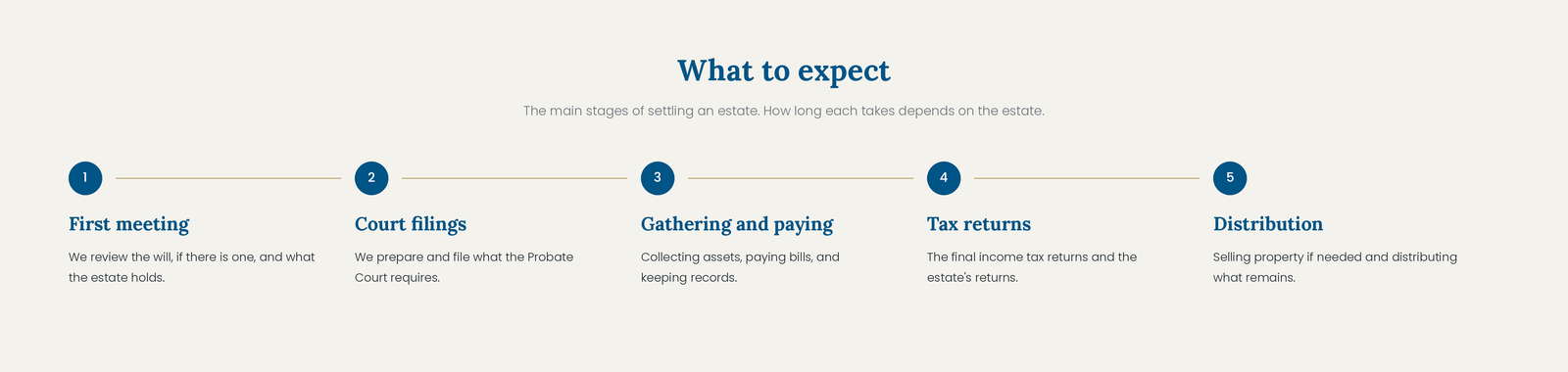
What to Expect


-
Very little has to happen legally in the first week. Handle the funeral arrangements, ask the funeral director for multiple certified death certificates, and secure the house, the pets, and the mail. The legal deadlines are measured in months, not days. See our “The First 30 Days” info sheet on our RESOURCES page.
-
A typical estate runs about twelve to eighteen months and that is the process working as designed rather than the court being slow. Creditors have a full year from the date of death to bring claims, so a personal representative who distributes everything early can be personally on the hook for a bill that arrives later. Simple estates finish faster and contested ones take years. Partial distributions are often possible well before the end. See our “How Probate Works in Massachusetts” info sheet on our RESOURCES page.
-
No. An asset goes through probate when the person owned it in their sole name at their date of death. A house in one name, an account with no co-owner and no beneficiary, a car, and personal belongings are all examples of “probate assets”. Anything jointly owned with survivorship language, anything with a named beneficiary, and anything owned by a trust passes automatically, often with just a death certificate and a form. Those beneficiary forms outrank the will, which is why a will and the actual result sometimes look nothing alike.
-
Start with the title first. If both names are on it, you already own the car and the RMV updates the paperwork with a certified death certificate. If only your spouse's name is on it, Massachusetts lets a surviving spouse transfer a passenger vehicle directly through the RMV without opening a probate case. A loan on the car, or a transfer to anyone other than the spouse, follows a different route. Call the insurer before you do anything else.
