

Elder Law & Nursing Home Protection Trusts
Planning for long-term care, explained plainly, so you can make decisions you can actually act on.
Planning for Long-Term Care
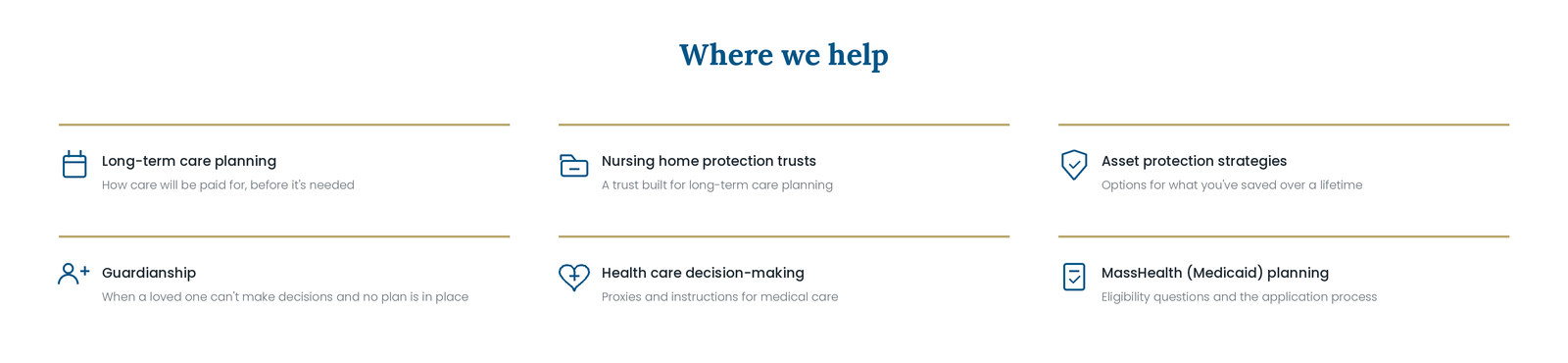
Elder law covers the legal side of aging: long-term care planning, asset protection, guardianship, and health care decision-making. A nursing home protection trust, also called a Medicaid asset protection trust, is one tool in that planning, designed to protect assets while working to preserve Medicaid eligibility if long-term care becomes necessary.
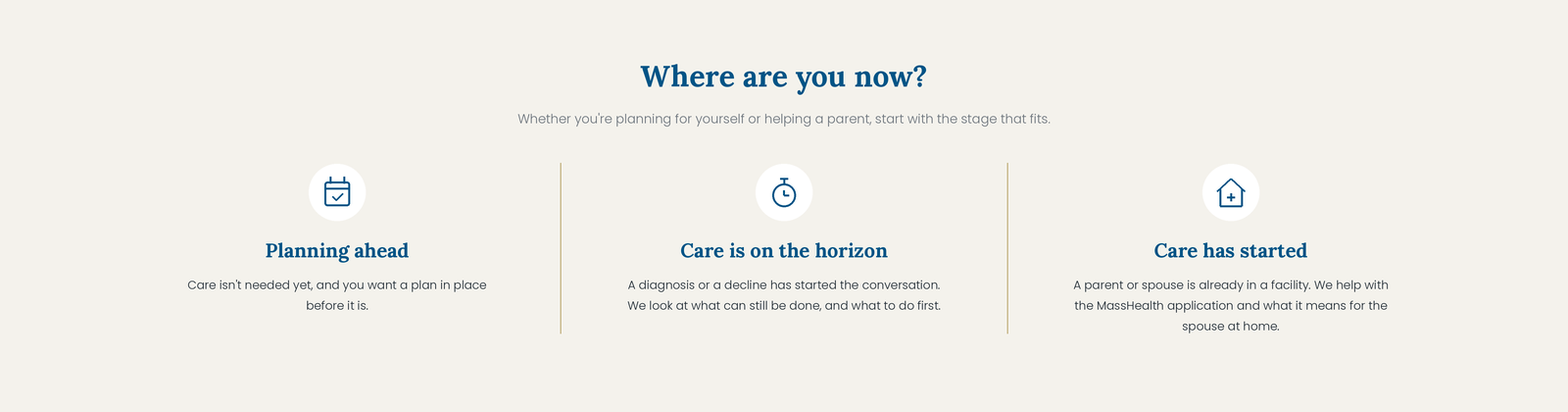
Elder law questions often come up at a stressful, uncertain time. We walk through your options in plain language, not legal jargon, so you understand what's actually on the table. From there, we help you build a clear plan you can act on with confidence, not a binder of legal theory to decode on your own.
Plain Answers, Clear Next Steps
-
No. A nursing home does not take anyone’s house. Families are usually referring to MassHealth (the state program that pays for most long‑term nursing home care), which can seek recovery from the resident’s estate after death. Whether a house is exposed to recovery depends on ownership and any prior planning. Options to protect a home become much more limited once nursing‑home care has already begun.
-
You can, but it rarely does what people hope. Once the house is theirs, it's exposed to their divorce, their creditors, and their own estate plan. The transfer also starts MassHealth's look-back clock, and any understanding that the house is still available to you creates a serious problem on a benefits application. It costs your children a tax benefit too: inherited property gets a new basis equal to its value at death, but a gift carries over your original basis, which can mean a large capital gains bill when they sell. A properly drafted irrevocable trust can accomplish the real goal without those risks and can be set up so your children still get the “step up” in basis.
-
You will not be left with nothing. The spouse at home keeps the house while living in it, a share of countable savings set by law and adjusted every year, one car, household belongings, and prepaid funeral arrangements. Your own income stays yours; MassHealth does not require you to put your Social Security or pension toward the nursing home bill. The size of your protected share is measured as of the date your spouse entered care, which is why advice before that date is worth more than advice after it.
-
It can file a claim against the probate estate, and families are often surprised by the amount. The claim can be deferred while a surviving spouse, a minor child, or a disabled child is living, and hardship waivers and a small-estate exception can reduce or eliminate it. A personal representative who distributes money before the claim is resolved can be personally responsible for it.
Questions
